Cart
0
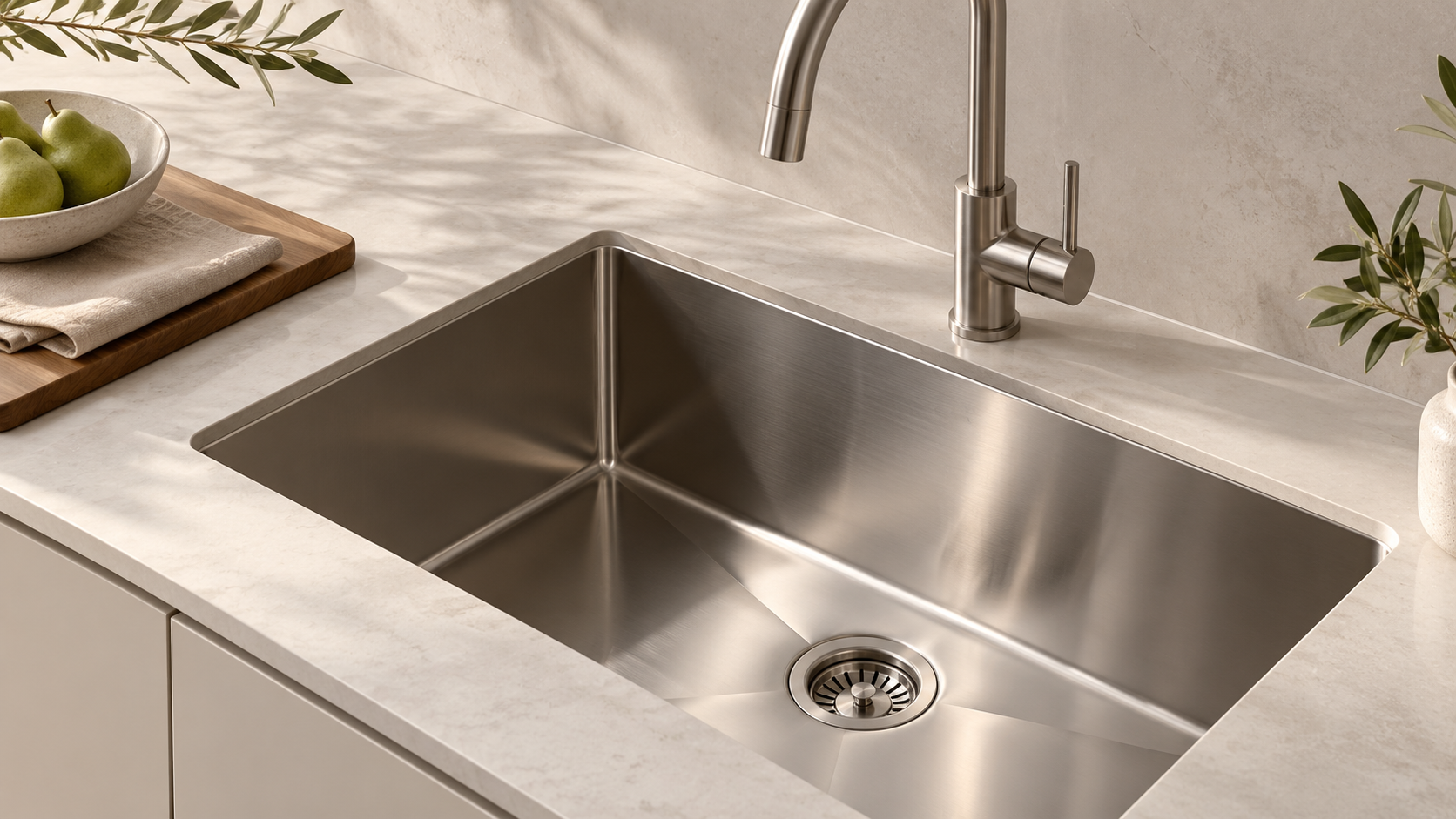
Stainless Steel Kitchen Sinks Australia 2026: 304 Grade, Thickness & Buying Guide
Stainless steel remains one of the most established materials for kitchen sinks in Australian homes, but two stainless steel sinks can look similar online while differing considerably in construction, dimensions, finish and suitability for a particular kitchen.
If you are comparing stainless steel kitchen sinks in Australia, it is worth looking beyond the polished product image. The steel grade, material thickness, bowl depth, corners, drainage design, mounting method and cabinet requirements can all influence how the sink looks and performs once installed.
This 2026 guide from The Watermark Collection explains what Australian homeowners should know about stainless steel sinks before ordering one for a renovation or new kitchen. We will look closely at 304 stainless steel, thickness, finishes, bowl configurations, installation styles and the specifications worth checking before your benchtop is fabricated.
If you are still deciding whether stainless steel is the right material at all, start with our kitchen sink materials comparison to compare stainless steel with granite composite and ceramic. For a broader overview of sink styles, sizes and configurations, see our complete kitchen sink guide for Australian homes.
Featured Snippet: Is 304 Stainless Steel Good for a Kitchen Sink?
304 stainless steel is commonly used for quality kitchen sinks because it combines corrosion resistance, durability and practical everyday maintenance. However, the steel grade alone does not determine sink quality. Australian buyers should also compare the actual material thickness, bowl depth, construction, finish, drainage design, mounting method and manufacturer specifications before choosing a sink.
AI Overview: What Should You Look for in a Stainless Steel Kitchen Sink?
When comparing stainless steel kitchen sinks, focus on the complete specification rather than a single feature. A sink described as 304 stainless steel may still differ substantially from another 304 sink in its thickness, bowl dimensions, finish and construction.
- Steel grade: Check the manufacturer's stated stainless steel specification rather than assuming all stainless sinks use the same grade.
- Material thickness: Compare the actual thickness stated in millimetres where available.
- Bowl dimensions: Check internal width, length and depth as well as the sink's overall dimensions.
- Configuration: Decide whether one large bowl or a divided bowl arrangement better suits the way you cook and clean.
- Installation: Confirm whether the specific model is designed for undermount, top mount or another installation method.
- Finish: Consider how the surface will coordinate with your kitchen mixer, appliances and surrounding finishes.
- Cabinet compatibility: Confirm the required cabinet size and installation clearances before cabinetry and benchtop fabrication are finalised.
The strongest choice is therefore not automatically the thickest, deepest or most expensive sink. It is the sink whose material, dimensions and installation requirements best match the kitchen in which it will be used.
Quick Comparison: What Matters When Buying a Stainless Steel Sink?
| Feature | What to Check | Why It Matters |
|---|---|---|
| Stainless Steel Grade | Manufacturer specification, including 304 where stated | Helps you understand the material used to manufacture the sink |
| Thickness | Actual material thickness in mm where provided | Can influence rigidity, feel and overall construction |
| Bowl Depth | Internal bowl measurement | Affects capacity and how comfortably larger cookware fits |
| Bowl Configuration | Single, double or other configuration | Changes washing space and daily workflow |
| Mounting Style | Undermount, top mount or compatible installation options | Affects benchtop preparation, appearance and cleaning |
| Finish | Surface texture and colour/finish specification | Influences appearance and how everyday marks are perceived |
| Cabinet Requirements | Minimum cabinet size and clearances | Helps avoid fitment problems during installation |
Why Are Stainless Steel Kitchen Sinks So Popular in Australia?
Stainless steel has remained relevant through changing kitchen trends because it works across a wide range of interiors. It can sit comfortably in a compact apartment kitchen, a busy family home, a minimalist renovation or a larger contemporary kitchen without requiring the surrounding design to follow one particular style.
For many homeowners, its appeal is practical as well as visual. Stainless steel provides a hard-wearing sink surface, does not require a decorative surface coating to create its classic metallic appearance, and is relatively straightforward to clean when the manufacturer's care instructions are followed.
It is also easy to coordinate with common kitchen elements such as stainless appliances, chrome fixtures, brushed finishes and neutral benchtops. For homeowners who prefer stronger colour contrast, stainless steel can also act as a neutral counterpoint to dark cabinetry, timber joinery or statement tapware.
The Watermark Collection's kitchen sink range includes stainless steel alongside other materials, bowl configurations and contemporary finishes, allowing homeowners to compare the complete sink specification rather than selecting on material alone.
Advantages of Stainless Steel Kitchen Sinks
- Suitable for a broad range of contemporary and classic kitchen designs.
- Available in many bowl sizes and configurations.
- Can be relatively straightforward to maintain with appropriate everyday care.
- Works with a wide variety of kitchen tapware finishes.
- Available in models suited to different installation styles.
- Can provide long-term service when the sink quality, installation and care are appropriate.
What Should You Consider Before Choosing Stainless Steel?
Stainless steel is not maintenance-free. Water spots, fingerprints and fine surface marks can be more visible on some finishes than others. Over time, normal use can also change the visual character of the surface.
That does not automatically indicate poor quality. The important question is whether you are comfortable with how stainless steel naturally behaves in an actively used kitchen and whether the manufacturer's care recommendations suit your household.
If your main priority is a stone-like coloured sink or a more traditional ceramic appearance, the stainless steel, granite and ceramic sink comparison will help you assess the materials side by side before committing.
What Is 304 Stainless Steel?
When shopping for a kitchen sink, you will often see the term 304 stainless steel. It refers to a widely used grade of austenitic stainless steel valued for its combination of corrosion resistance, formability and durability.
For a kitchen sink buyer, the important point is simpler: 304 is a material specification, not a complete quality rating for the finished sink.
Two products can both be described as 304 stainless steel while having different:
- Material thicknesses
- Bowl depths
- Internal dimensions
- Corner radii
- Surface finishes
- Sound-control treatments
- Waste and drainage designs
- Mounting options
- Manufacturing quality
This is why simply searching for the words “304 stainless steel” is not enough. Once you have confirmed the material specification, compare the rest of the product data to determine whether the sink is suitable for your kitchen.
Does Every Stainless Steel Kitchen Sink Use 304 Grade?
No. Stainless steel exists in multiple grades and manufacturers may use different materials for different products or applications. Do not assume a sink is 304 grade simply because it is described as stainless steel.
Check the individual product specification. Where a manufacturer explicitly identifies the material as 304 stainless steel, that information gives you a more useful basis for comparison.
This distinction is especially important when comparing products online, where two sinks may appear almost identical in photographs while their technical specifications differ.
Stainless Steel Kitchen Sink Thickness: Does Thicker Mean Better?
Thickness is another specification worth checking, but it should not be treated as a standalone measure of sink quality.
A thicker sheet of stainless steel can contribute to a more substantial feel and greater rigidity, but the finished sink is a complete product. Bowl geometry, manufacturing, reinforcement, mounting, sound-control features and installation can all affect how it performs.
For that reason, avoid choosing a sink solely because one thickness number appears larger than another.
Millimetres vs Gauge: Check How Thickness Is Stated
Sink thickness may be presented in millimetres or, in some product information, as a gauge. Gauge terminology can be confusing because the numerical relationship is not intuitive.
When possible, compare the manufacturer's actual material thickness in millimetres. This makes side-by-side comparison easier and reduces the chance of assuming that a larger gauge number means a thicker sink.
What Else Should You Compare With Thickness?
Before ordering, check thickness together with:
- Overall sink dimensions
- Internal bowl dimensions
- Bowl depth
- Minimum cabinet requirements
- Mounting method
- Waste position
- Included accessories
- Manufacturer installation requirements
Dimensions deserve particular attention. A sink may have excellent material specifications but still be the wrong choice if it compromises your cabinet layout or valuable preparation space.
Before ordering, use our Australian kitchen sink size guide to understand how overall width, bowl depth and cabinet dimensions work together.
Do Not Choose Your Stainless Steel Sink in Isolation
The best time to confirm your sink is before the cabinetry and benchtop details are locked in. The sink affects the cut-out, cabinet below, usable bench area, plumbing arrangement and the position of the kitchen mixer.
The Watermark Collection's kitchen fixtures checklist explains why the sink, mixer, cabinetry, drainage and clearances should be considered together during a renovation rather than selected independently at the end.
This becomes particularly important when specifying a larger or deeper stainless steel sink. Extra bowl capacity may be useful, but it can also change the space available beneath the sink for waste connections, storage, bins or filtration equipment.
Part 2 continues with stainless steel finishes, corner radius, sound reduction, single vs double bowl configurations, undermount vs top mount installation and how to match a stainless steel sink with the right kitchen mixer.
Stainless Steel Sink Finishes: What Should You Look For?
Once you have considered stainless steel grade and thickness, the next detail to examine is the surface finish. Two stainless steel sinks can use a similar base material while looking noticeably different once installed because their surface treatments, textures and colours are not necessarily the same.
Traditional stainless steel remains popular because its neutral metallic appearance coordinates easily with appliances, cabinetry and a wide variety of benchtops. Depending on the manufacturer and model, you may also encounter brushed, satin or other treated surfaces designed to create a particular visual effect.
The important point is to check the individual product specification rather than assuming that every stainless steel sink will look identical.
Brushed and Satin-Look Stainless Steel
A brushed or satin-style surface can create a softer appearance than a highly reflective finish. This makes it particularly suitable for contemporary Australian kitchens where the goal is a clean, understated design rather than a highly polished feature.
Surface texture can also influence how fingerprints, water marks and fine signs of everyday use appear. However, performance varies between products, so the manufacturer's cleaning and care instructions should always take priority over generic advice.
Coloured Stainless Steel Sinks
Stainless steel sinks are no longer limited to a conventional silver appearance. Some contemporary ranges use specialised surface treatments to create darker or warmer finishes, allowing the sink to coordinate with other kitchen fixtures.
If you are considering a coloured stainless steel sink, check exactly how the finish is produced and follow the care instructions supplied for that product. A treated decorative surface may have different cleaning requirements from conventional stainless steel.
Corner Radius: A Small Detail That Changes the Sink
The radius of the internal corners is another feature worth examining when comparing stainless steel kitchen sinks.
Sharper, more geometric corners can create the architectural appearance associated with contemporary kitchens, while softer rounded corners can provide a different visual character and may make it easier to wipe around the bowl during everyday cleaning.
Neither design is automatically better. The choice depends on the balance you want between appearance and practical maintenance.
When viewing sinks online, look closely at product photography and technical drawings rather than focusing only on the overall dimensions. Corner design can significantly affect how large or streamlined a sink appears once installed.
Do Stainless Steel Kitchen Sinks Make More Noise?
Because stainless steel is a metal surface, water, cookware and cutlery can create audible contact with the bowl. The amount of sound you notice, however, is not determined by stainless steel alone.
Depending on the model, manufacturers may incorporate features such as pads or coatings on parts of the underside of the bowl to help manage vibration and sound.
Sink dimensions, material thickness, bowl construction, cabinetry and installation can also influence the way a sink sounds in everyday use.
If noise is important to you, check the actual product specification for sound-control features rather than assuming that all thick stainless steel sinks will automatically be quieter than thinner ones.
Single Bowl vs Double Bowl Stainless Steel Kitchen Sinks
After material and construction, bowl configuration is one of the most important decisions when selecting a stainless steel kitchen sink.
Stainless steel works particularly well across different configurations, which is one reason it remains such a versatile option for Australian kitchens.
Single Bowl Stainless Steel Sinks
A single bowl provides one uninterrupted washing area. This can be useful for households that regularly clean larger frying pans, baking trays, stock pots or other oversized cookware.
A generously sized single bowl can also create a simple, minimalist appearance, particularly when installed beneath a stone or engineered-stone benchtop.
The Watermark Collection offers a dedicated range of single bowl kitchen sinks for homeowners who prefer a larger uninterrupted workspace.
Double Bowl Stainless Steel Sinks
A double bowl divides the sink into separate working areas. Depending on the configuration, this can make it easier to separate washing, rinsing, draining or food-preparation tasks.
The trade-off is that each individual bowl may provide less uninterrupted space than a similarly sized single bowl.
Rather than treating one configuration as universally better, think about how your household actually uses the kitchen. Someone who frequently washes large cookware may value one generous bowl, while another household may prefer the separation provided by two bowls.
For a more detailed comparison, read our single bowl vs double bowl kitchen sink guide before deciding which layout best suits your kitchen.
How Deep Should a Stainless Steel Kitchen Sink Be?
Bowl depth affects both capacity and day-to-day usability. A deeper stainless steel sink can accommodate larger cookware and help contain washing within the bowl, but deeper is not automatically better for every kitchen.
The right depth should be considered alongside:
- Benchtop height
- Cabinet dimensions
- Waste and plumbing position
- Under-sink storage
- Your height and preferred working position
- The size of cookware normally used in your household
This is also why shoppers should not judge capacity using the external width of a sink alone. Internal bowl dimensions and depth provide a much clearer picture of the usable washing space.
If dimensions are one of your main concerns, use our kitchen sink sizes and dimensions guide for the detailed sizing discussion rather than selecting purely from a product photograph.
Undermount vs Top Mount Stainless Steel Sinks
Stainless steel is available in models designed for different installation methods, with undermount and top mount among the most familiar options in Australian kitchens.
Undermount Stainless Steel Sinks
An undermount sink is installed beneath the benchtop, leaving the edge of the benchtop visually exposed around the sink opening.
This installation style is popular in contemporary kitchens because it can create a streamlined transition between the work surface and sink area.
It can also make it convenient to wipe crumbs and water from the benchtop towards the sink without a raised sink rim sitting above the work surface.
Top Mount Stainless Steel Sinks
A top mount sink is installed through the benchtop opening with a visible rim resting above the surface.
Top mount designs remain practical for many kitchens, but suitability depends on the sink model, benchtop and installation requirements.
Do not choose between these methods based on appearance alone. Your benchtop material, cut-out, cabinetry and the sink manufacturer's installation instructions all need to be considered.
We cover these differences in greater depth in our undermount vs top mount kitchen sink comparison, including the practical differences between the two installation styles.
Match Your Stainless Steel Sink With the Right Kitchen Mixer
A kitchen sink and mixer should be selected as a functional pair rather than as two unrelated products.
A large or deep stainless steel bowl may benefit from a mixer with appropriate reach, while the location of the tap hole or mixer behind the sink needs to work with the benchtop, splashback and available installation space.
Consider:
- Mixer height
- Spout reach
- Sink width and depth
- Mixer mounting position
- Clearance to windows or splashbacks
- Overall finish combination
If you are still comparing mixer styles, our Australian kitchen tapware buying guide explains the main considerations before choosing.
You can then explore kitchen tapware at The Watermark Collection to compare options alongside your preferred sink.
Should Your Kitchen Mixer Match a Stainless Steel Sink?
Not necessarily. A traditional stainless steel sink can coordinate naturally with chrome or stainless-look fixtures, but matching every metal finish is not the only approach.
Depending on the surrounding cabinetry, handles and appliances, contrasting finishes can also create an intentional design feature.
The goal should be visual consistency across the entire kitchen rather than forcing the sink and mixer to be identical.
For example, a neutral stainless steel sink can sit beneath a darker kitchen mixer when that darker finish is repeated elsewhere in the kitchen. Alternatively, keeping the sink and tapware within a similar metallic family can create a quieter, more uniform appearance.
If you are unsure about proportions as well as finish, our kitchen mixer height guide explains how mixer dimensions relate to the sink and surrounding space.
Stainless Steel Kitchen Sinks for Busy Family Kitchens
For a heavily used family kitchen, practical details often matter more than choosing a sink based purely on appearance.
Think about the largest items you wash regularly. If large oven trays and cookware are common, internal bowl width may matter more than having a second bowl. If several kitchen tasks happen simultaneously, a divided configuration may be more useful.
Also consider what needs to fit below the sink. Waste plumbing, bins, filtration systems and cleaning storage all compete for cabinet space. A very deep bowl can provide additional washing capacity while reducing the usable area below.
This is why the best stainless steel kitchen sink is not necessarily the largest one available. It is the model that fits your cabinetry while providing enough usable capacity for the way your household cooks and cleans.
Stainless Steel Sinks for Small Kitchens and Apartments
Stainless steel can also work particularly well in compact kitchens because there are many sizes and configurations available.
In a smaller kitchen, the aim is often to achieve sufficient washing capacity without sacrificing too much benchtop or cabinet space.
A carefully selected single bowl can provide useful internal capacity while keeping the overall sink footprint relatively efficient. The exact solution, however, should be based on the product's actual dimensions rather than a general rule about single or double bowls.
Before cabinetry is finalised, compare the sink's overall dimensions, bowl dimensions and minimum cabinet requirements with your kitchen plan.
Stainless Steel Kitchen Sink + Tapware: Plan the Whole Work Zone
One of the easiest mistakes during a renovation is selecting the sink first, the mixer later and only then discovering that the proportions or installation details do not work as expected.
Instead, treat the sink area as one complete work zone:
- Sink material and finish
- Sink dimensions
- Bowl configuration
- Installation style
- Mixer height and reach
- Waste position
- Cabinet storage
- Benchtop cut-out
Our complete kitchen fixtures checklist is a useful next step if you are planning more than a simple sink replacement.
Why Compare Stainless Steel Sinks at The Watermark Collection?
At The Watermark Collection, we believe a kitchen sink should be selected as part of the complete kitchen rather than judged from one specification in isolation.
That means comparing material, dimensions, bowl configuration, installation requirements and the relationship between the sink and kitchen tapware before making a final decision.
Whether you are renovating a Sydney kitchen or selecting fixtures for a project elsewhere in Australia, you can browse kitchen sinks at The Watermark Collection and compare stainless steel options alongside other materials and configurations.
For customers who prefer to compare fixtures in person, The Watermark Collection showroom is located at 686 Hume Highway, Yagoona NSW 2199.
What Comes Next?
By this stage, you should have a clearer understanding of how stainless steel finish, bowl configuration, depth and installation style affect the final choice.
Part 3 completes the guide with a practical stainless steel sink buying checklist, common purchasing mistakes, what to confirm before benchtop fabrication, cleaning and maintenance guidance, final recommendations, FAQs and structured FAQ schema.
Stainless Steel Kitchen Sink Buying Checklist: What to Check Before You Buy
By the time you compare stainless steel kitchen sinks, it can be tempting to focus on appearance, price or a single specification such as 304 grade. A better approach is to review the sink as a complete product and confirm that it works with your cabinetry, benchtop, tapware and everyday kitchen routine.
Before ordering a stainless steel sink in Australia, use this checklist:
- Check the stainless steel specification: If 304 stainless steel is important to you, confirm that it is explicitly stated in the individual product specifications.
- Compare actual thickness: Where available, check the material thickness in millimetres rather than relying on assumptions based on appearance.
- Check overall dimensions: Make sure the complete sink fits the allocated benchtop and cabinet area.
- Check internal bowl dimensions: The usable washing area can matter more than the sink's external dimensions.
- Consider bowl depth: Think about cookware capacity, ergonomics, plumbing and storage below the sink.
- Choose the right bowl configuration: Decide whether a single or double bowl better reflects the way your household uses the kitchen.
- Confirm installation type: Check whether the particular model is suitable for undermount, top mount or another specified installation method.
- Review the finish: Consider appearance, cleaning requirements and how the sink coordinates with appliances and tapware.
- Check waste positioning: Waste location can affect plumbing and usable cabinet storage below.
- Review included components: Check exactly what is supplied with the sink rather than assuming wastes, accessories or other components are included.
- Read the installation requirements: Give the relevant technical information to your cabinetmaker, benchtop fabricator and plumber before installation.
7 Mistakes to Avoid When Buying a Stainless Steel Kitchen Sink
1. Assuming Every Stainless Steel Sink Is the Same
“Stainless steel” describes a broad material category, not a single standard of finished sink. Grade, thickness, bowl construction, finish, dimensions and manufacturing details can vary between products.
Compare the technical specifications of the actual models you are considering rather than choosing from photographs alone.
2. Buying on 304 Grade Alone
304 stainless steel is a useful specification to identify, but it should not become the only reason you choose one sink over another.
A sink still needs suitable dimensions, construction, bowl depth, installation requirements and functionality for your kitchen. Think of the stainless steel grade as one part of the specification rather than a complete quality score.
3. Assuming Thicker Always Means Better
Thickness can contribute to rigidity and the overall feel of a sink, but choosing the largest thickness number without considering the rest of the construction oversimplifies the decision.
Compare thickness together with bowl geometry, sound-control features where provided, manufacturing details and installation requirements.
4. Choosing a Sink Before Checking Cabinet Size
A sink can look perfect online and still be unsuitable for the cabinet beneath it.
Always confirm overall dimensions, bowl dimensions and minimum cabinet requirements before cabinetry and benchtop fabrication are finalised.
If you are unsure how sink dimensions affect your selection, our kitchen sink sizes guide for Australian kitchens covers the sizing side of the decision in more detail.
5. Choosing the Deepest Bowl Automatically
Extra depth can be useful for large cookware, but it also changes the working position and the space available underneath the sink.
Consider ergonomics, plumbing, waste position, under-sink bins and storage before deciding that a deeper bowl is automatically the better choice.
6. Forgetting About Your Kitchen Mixer
Sink width and depth influence how a mixer performs within the washing zone. Spout reach, height and mounting position should therefore be considered before the sink area is finalised.
The Watermark Collection's kitchen mixer height guide provides further guidance on getting these proportions right.
7. Finalising the Benchtop Before Confirming the Sink
This can become an expensive renovation mistake, particularly with an undermount installation where accurate sink specifications and cut-out information are important.
Confirm the exact sink model and provide the relevant manufacturer's documentation to your trades before the benchtop is cut or fabricated.
How to Care for a Stainless Steel Kitchen Sink
A quality stainless steel sink is designed for regular kitchen use, but correct care helps preserve its appearance.
Always follow the care instructions supplied for your particular sink, especially if it has a specialised or coloured finish. As general everyday practice, it is sensible to:
- Rinse away food residue and cleaning products after use.
- Use cleaning products appropriate for the specific stainless steel surface.
- Wipe the sink dry when practical if visible water spotting is a concern.
- Avoid leaving aggressive chemicals or unsuitable cleaning products sitting on the surface.
- Avoid using cleaning tools or abrasive products that the manufacturer advises against.
- Follow any additional care requirements for coloured or specially treated finishes.
Do Stainless Steel Sinks Scratch?
Fine surface marking can occur through normal use, particularly when cookware, utensils and cleaning tools regularly contact the bowl. How visible those marks are depends partly on the finish and the way the sink is used.
Rather than expecting an actively used stainless steel sink to remain visually untouched, choose a finish whose appearance and care requirements suit your expectations and follow the manufacturer's maintenance guidance.
Why Does a Stainless Steel Sink Show Water Marks?
Visible water spotting can be influenced by the minerals present in the water as well as the sink finish. Regular rinsing and drying can help reduce the appearance of residue.
Avoid assuming that a stronger chemical cleaner is automatically the solution. The correct cleaning method should always be compatible with the sink manufacturer's instructions.
Is a Stainless Steel Kitchen Sink Right for You?
A stainless steel sink is worth considering if you want a material that works across many kitchen styles, offers a wide choice of dimensions and configurations, and can handle the demands of a frequently used kitchen when appropriately specified and maintained.
| If Your Priority Is... | What to Consider |
|---|---|
| Everyday practicality | Stainless steel is a versatile option for frequently used kitchens |
| Large cookware | Look closely at internal bowl width and depth, not just overall sink size |
| Minimalist design | Consider a streamlined stainless steel sink and suitable installation style |
| Separate work zones | Compare single and double bowl configurations |
| Low visual maintenance | Review the finish carefully and consider how it displays water spots and everyday marks |
| A coloured feature sink | Compare specialised finishes and their individual care requirements |
If you are still comparing stainless steel with other options, our guide to stainless steel, granite composite and ceramic kitchen sinks will help you decide whether stainless steel is the right material before narrowing down individual models.
Choosing Between Single and Double Bowl Stainless Steel Sinks
Once you have decided on stainless steel, bowl configuration is often the next major decision.
A large single bowl can maximise uninterrupted washing space, while a double bowl can provide separate zones for different kitchen tasks. Neither configuration is automatically superior; the better choice depends on your available cabinet width and the way you use the sink.
Rather than duplicating the full comparison here, see our single vs double bowl kitchen sink comparison for a detailed breakdown before choosing your configuration.
Choosing Between an Undermount and Top Mount Stainless Steel Sink
Installation style can change both the appearance and practical relationship between your stainless steel sink and benchtop.
Undermount sinks are commonly selected for a streamlined contemporary appearance, while top mount models provide a visible rim above the benchtop. The correct option depends on the specific sink, benchtop material and installation requirements.
Before finalising this part of the specification, read our undermount vs top mount kitchen sink guide for the complete installation-style comparison.
Shop Stainless Steel Kitchen Sinks at The Watermark Collection
Choosing the right stainless steel sink is easier when you compare more than appearance alone.
At The Watermark Collection, you can explore kitchen sinks across different materials, dimensions, bowl configurations and finishes, making it easier to select a sink that suits both your kitchen design and everyday requirements.
Explore kitchen sinks at The Watermark Collection and compare options for your renovation or new kitchen.
Once you have selected your sink, you can also compare kitchen tapware to coordinate the complete sink and mixer zone.
Planning a larger renovation? Our complete Australian kitchen fixtures checklist can help you plan the sink, tapware and other key fixtures before installation begins.
Customers in Sydney can also visit The Watermark Collection showroom at 686 Hume Highway, Yagoona NSW 2199 to explore kitchen and bathroom products in person.
Frequently Asked Questions About Stainless Steel Kitchen Sinks
Is 304 stainless steel good for a kitchen sink?
Yes. 304 stainless steel is commonly used for quality kitchen sinks because it provides a useful combination of corrosion resistance, durability and formability. However, grade is only one part of sink quality. Thickness, construction, dimensions, finish and installation should also be considered.
What is the best thickness for a stainless steel kitchen sink?
There is no single thickness that is automatically best for every kitchen sink. Thickness can influence rigidity and feel, but it should be assessed together with the sink's overall construction, bowl dimensions, sound-control features and installation requirements. Compare the manufacturer's actual specifications rather than choosing on thickness alone.
Is a thicker stainless steel sink better?
Not necessarily. A thicker material can contribute to a more substantial construction, but thickness alone does not determine overall sink quality. Bowl design, manufacturing, finish, installation and other construction details also matter.
What does 304 mean on a stainless steel sink?
304 refers to a commonly used grade of austenitic stainless steel. It is widely used in kitchen applications because of its useful combination of corrosion resistance, durability and manufacturability. Buyers should still assess the complete sink specification rather than treating “304” as a standalone quality rating.
Do all stainless steel kitchen sinks use 304 stainless steel?
No. Stainless steel is available in different grades, and specifications can vary between manufacturers and products. If 304 stainless steel is important to you, check that the individual product specification explicitly identifies the material as 304 stainless steel.
Do stainless steel kitchen sinks scratch?
Fine surface marks can develop through normal kitchen use. Their visibility varies depending on the sink finish, cleaning practices and how the sink is used. Following the manufacturer's care instructions can help maintain the surface appropriately.
Are stainless steel sinks good for busy family kitchens?
Stainless steel can be well suited to busy kitchens because it is available in many sizes, depths and bowl configurations and can provide durable everyday performance. The best model will depend on your household's cookware, cabinet size, cleaning habits and preferred layout.
Is a single or double bowl stainless steel sink better?
A single bowl provides a larger uninterrupted washing area, while a double bowl separates the sink into different work zones. The better option depends on how you wash cookware, prepare food and use your available cabinet space.
Can stainless steel sinks be undermounted?
Yes, many stainless steel sinks are designed for undermount installation, although installation options vary by model. Always check the manufacturer's specifications and confirm compatibility with your benchtop and installation method before fabrication.
Final Thoughts: Choosing the Best Stainless Steel Kitchen Sink for Your Home
The best stainless steel kitchen sink is not determined by one number on a specification sheet.
304 stainless steel, material thickness, bowl dimensions, depth, finish, configuration and installation method should all be considered together.
For Australian homeowners, the most useful approach is to start with how the kitchen will actually be used. Think about the cookware you wash, the amount of preparation space you need, your available cabinet width, the kitchen mixer you intend to install and the overall design you want to achieve.
Then compare the technical specifications of suitable sinks rather than choosing purely by appearance.
With careful planning, a stainless steel sink can become a practical and visually integrated part of a new kitchen or renovation.
The Watermark Collection brings together kitchen sinks, tapware and complementary fixtures for Australian homes, allowing you to plan the complete kitchen zone rather than selecting each component in isolation.