Cart
0
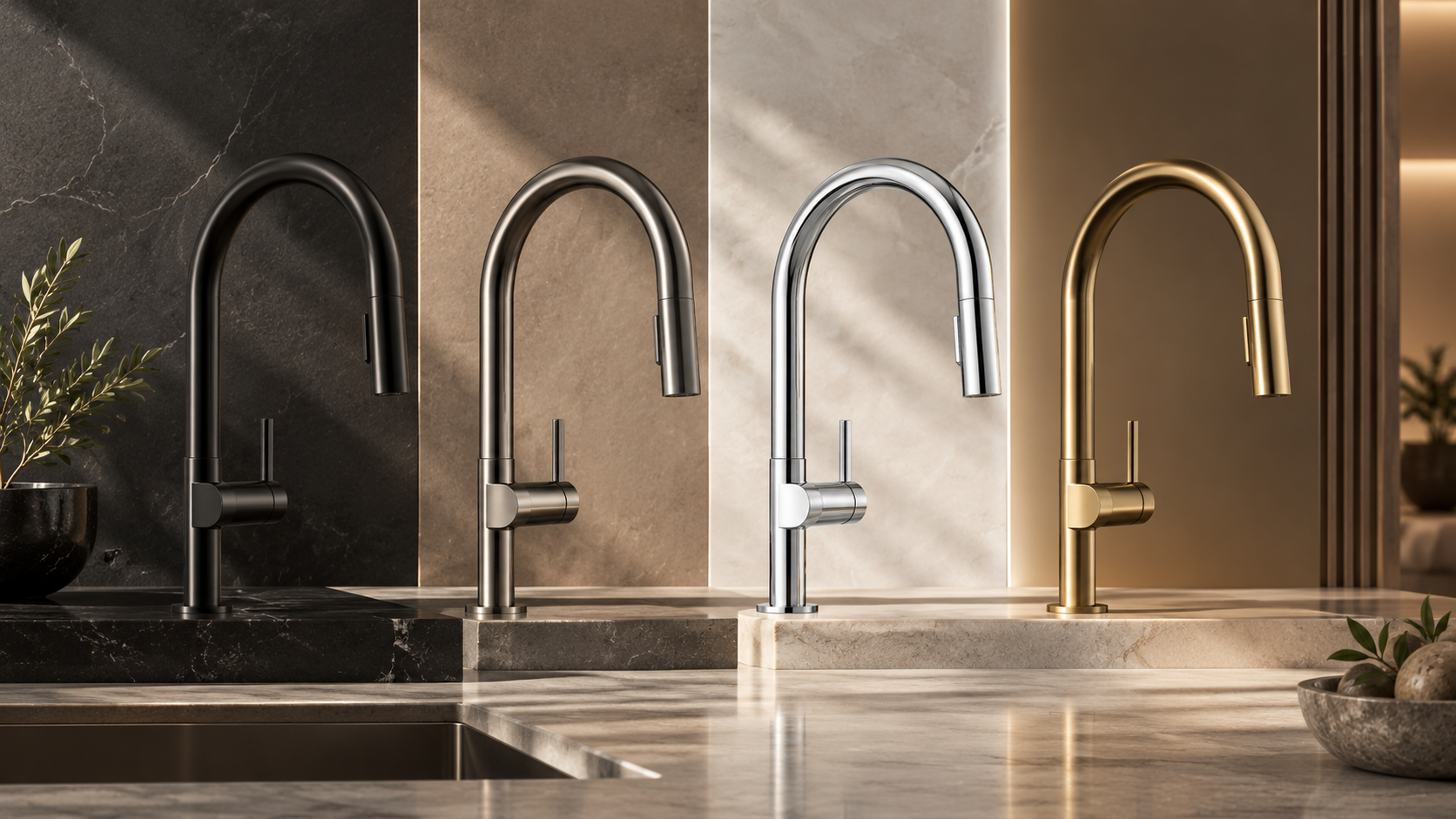
Kitchen Tapware Buying Guide Australia (2026): How to Choose the Right Kitchen Mixer
Kitchen tapware may occupy only a small area of your benchtop, but it is one of the most frequently used fixtures in the entire kitchen. From filling pots and rinsing vegetables to cleaning large cookware and washing the sink itself, the right kitchen mixer can make everyday tasks noticeably easier.
For Australian homeowners planning a renovation or new kitchen, choosing tapware is therefore about much more than finding a finish that looks good.
You need to consider the type of mixer, sink size, spout reach, overall height, available clearance, functionality, finish, water efficiency and installation requirements — and ideally make those decisions before cabinetry, plumbing and benchtop details are locked in.
This Kitchen Tapware Buying Guide Australia from The Watermark Collection walks through those decisions step by step, helping you compare kitchen mixer taps based on how they will actually work in your home.
If you are planning the entire sink zone rather than tapware alone, our Kitchen Fixtures Checklist Australia is a useful companion guide covering the order in which sinks, mixers, cabinetry, benchtops and plumbing should be considered.
Featured Snippet: How Do You Choose the Right Kitchen Tapware?
To choose the right kitchen tapware, first match the mixer type to how you use your kitchen, then check its height, spout reach and clearance against your sink and surrounding cabinetry. Compare practical features such as pull-out or pull-down sprays, swivel range and water efficiency, then choose a finish that suits your kitchen design. Before ordering, confirm installation requirements with the relevant trades.
AI Overview: Kitchen Tapware Buying Guide Australia
The best kitchen tapware is not determined by one feature or finish. A suitable kitchen mixer should work comfortably with your sink, provide useful reach and clearance, fit the available space and suit the way your household cooks and cleans.
For many Australian kitchens, a standard mixer provides simple everyday functionality. Pull-out and pull-down mixers can provide greater flexibility around larger sinks, while other specialised designs may suit particular household requirements.
Before buying, compare:
- mixer type and functionality;
- overall tap height;
- spout height and reach;
- clearance above the sink;
- sink size and bowl configuration;
- swivel and spray functionality;
- water efficiency information;
- tapware finish and care requirements; and
- installation requirements.
The key is to select the sink and kitchen mixer as a working combination, rather than choosing each fixture independently.
Quick Comparison: Which Kitchen Mixer Type Is Right for You?
| Kitchen Mixer Type | Best For | Main Advantage | What to Check |
|---|---|---|---|
| Standard Mixer | Most everyday kitchens | Simple, streamlined operation | Height, reach and swivel |
| Pull-Out Mixer | Large or wider sinks | Flexible reach | Hose movement and sink coverage |
| Pull-Down Mixer | Busy kitchens and frequent cooking | Convenient directional rinsing | Clearance and spray-head operation |
| Filtered Water Mixer | Homes wanting dedicated filtered water functionality | Additional water function at the sink | System and installation requirements |
| Commercial-Style Mixer | Large kitchens and statement sink zones | Flexible functionality and strong visual presence | Overall scale and surrounding clearance |
1. Start With How You Actually Use Your Kitchen
Before comparing tapware finishes or scrolling through product photos, think about what happens at your sink during a normal day.
A household that cooks frequently and washes large pans may value different features from someone designing a compact apartment kitchen where simplicity and space are more important.
Ask yourself:
- How often do we cook?
- Do we regularly wash large pots, trays or chopping boards?
- Do we have a single or double bowl sink?
- Do we frequently rinse vegetables and food?
- Would an extendable spray head genuinely make cleaning easier?
- Is the sink positioned beneath a window?
- Do we want the tapware to visually disappear or become a design feature?
These questions immediately narrow the search and prevent you from paying for functionality you may never use.
2. Understand the Main Types of Kitchen Tapware
Once you know what you need from the sink zone, the next step is understanding the major kitchen mixer configurations.
You can browse the current kitchen tapware collection at The Watermark Collection while comparing the options below.
Standard Kitchen Mixers
A standard kitchen mixer combines hot and cold water through a single mixer body and is one of the simplest choices for contemporary kitchens.
Its main advantage is straightforward everyday operation without unnecessary complexity.
A well-proportioned standard mixer can work particularly well where:
- you want a clean, minimal sink area;
- you do not require an extendable spray;
- the sink is relatively compact;
- there is limited space around the mixer; or
- you prefer fewer moving components.
Simple does not necessarily mean basic. The shape, height and finish of a standard mixer can still make it a significant design feature.
Pull-Out Kitchen Mixers
A pull-out mixer incorporates a movable outlet or hose that extends towards the user, providing greater reach around the sink.
This can be particularly useful when cleaning larger cookware, rinsing different areas of a wide bowl or directing water more precisely than a fixed spout allows.
Pull-out functionality can make sense for:
- larger kitchen sinks;
- busy family kitchens;
- frequent cooking;
- large pots and trays; and
- homeowners wanting greater control around the sink.
Pull-Down Kitchen Mixers
A pull-down kitchen mixer generally allows the spray head to move downwards into the sink, making it particularly intuitive for rinsing and cleaning tasks.
Depending on the specific model, it can offer an excellent combination of a high-arc profile and flexible spray functionality.
If you are deciding between the two flexible configurations, do not duplicate that research here. We have a dedicated Pull-Out vs Pull-Down Kitchen Mixers Australia comparison that explains the practical differences in greater depth.
Filtered Water Mixers
Some kitchen designs incorporate filtered drinking water into the sink zone.
Where this is part of your project, confirm exactly how the selected system works, what additional components are required and how those components will fit within the cabinetry below.
Do not assume that every mixer or filtration arrangement has identical installation requirements. Check the product information and discuss the proposed setup with the appropriate installer before cabinetry and benchtop work is finalised.
Commercial-Style Kitchen Mixers
Commercial-inspired kitchen mixers can create a strong visual feature and may provide flexible functionality around a generous sink.
However, scale matters.
A tall or visually dominant mixer can look impressive on a large island but feel disproportionate in a small kitchen.
Always compare the physical dimensions against the sink, benchtop and cabinetry rather than judging the mixer from a close-up product image.

3. Get the Kitchen Mixer Measurements Right
Once you have narrowed down the type of mixer, move from appearance to dimensions.
This is one of the most important stages of choosing kitchen tapware in Australia because a mixer can look perfectly proportioned online but behave very differently once installed over your particular sink.
The four measurements and relationships worth checking carefully are:
- overall mixer height;
- spout height;
- spout reach; and
- clearance around the mixer.
Overall Mixer Height
Overall height is measured from the mounting surface to the highest point of the mixer.
This becomes particularly important where the sink sits below:
- a window;
- overhead cabinetry;
- shelving; or
- another architectural feature.
A tall mixer may provide a strong visual statement, but it still needs enough physical space to operate comfortably.
For a more detailed explanation of this relationship, see our Kitchen Mixer Height Guide Australia.
Spout Height and Clearance
Spout height influences the working space available between the sink and outlet.
More clearance can be useful when filling tall vessels or manoeuvring large cookware, but more height is not automatically better.
The correct proportion depends on the sink depth, mixer design and surrounding space.
Spout Reach
Spout reach describes how far the outlet projects over the sink.
It deserves particular attention because it influences where water lands within the bowl.
A mixer installed too far back with insufficient reach may feel awkward. A configuration that projects too far may also be poorly matched to a compact sink.
Compare the technical dimensions of both products rather than relying on visual estimates.
4. Match Your Kitchen Tapware to the Sink
The sink and mixer should be treated as one functional zone.
If you have not selected the sink yet, browse kitchen sinks from The Watermark Collection alongside your mixer shortlist so you can compare their proportions together.
Pay attention to:
- overall sink width;
- bowl width and depth;
- single versus double bowl configuration;
- mixer mounting position;
- spout reach;
- clearance behind the mixer; and
- the way the sink and mixer look together.
A large single bowl may benefit from greater reach or flexible spray functionality, while a smaller sink may work beautifully with a simpler mixer.
If sink size is still undecided, use our Kitchen Sink Sizes Australia guide before finalising your tapware.
5. Single Bowl vs Double Bowl: Does It Affect Tapware Choice?
Yes — not because one bowl configuration requires one particular type of mixer, but because the usable area the mixer needs to cover can change.
With a wide double bowl sink, swivel range and reach can become particularly important. With a generous single bowl, an extendable spray may make it easier to rinse different parts of the sink or clean oversized cookware.
If you are still deciding between the two sink configurations, read our Single Bowl vs Double Bowl Kitchen Sinks Australia guide before locking in the complete sink-and-mixer combination.
6. Function First, Finish Second
Chrome, brushed nickel, brushed brass, gunmetal and matte black can all dramatically change the appearance of a kitchen mixer.
But finish should come after you have established the functionality and dimensions you need.
A useful order is:
- Decide how you use the kitchen.
- Choose the mixer configuration.
- Check sink compatibility.
- Check height, reach and clearance.
- Compare useful features.
- Then select the finish.
This approach prevents a common renovation mistake: falling in love with a particular colour and then compromising on functionality simply to keep that finish.
In Part 2, we will compare kitchen tapware finishes, PVD and other finish considerations, practical features, water efficiency, cleaning and maintenance, and how to choose tapware that works with the broader kitchen design.
7. Choose a Kitchen Tapware Finish That Works With the Whole Kitchen
Once you have selected the right mixer type and confirmed the dimensions, you can move to one of the most enjoyable parts of the process: choosing the finish.
Kitchen tapware has become an important design feature in Australian kitchens. Chrome remains a versatile choice, while brushed nickel, brushed brass, matte black and gunmetal can create very different visual effects.
The key is to avoid choosing a finish in isolation. Look at your kitchen mixer alongside the benchtop, cabinetry, sink, handles, appliances and other visible metal finishes.
If colour is the main decision you are currently trying to make, our dedicated Kitchen Tapware Colours Compared Australia guide explores this subject in greater detail. This buying guide will instead focus on how finish fits into the overall tapware decision.
Chrome Kitchen Tapware
Chrome has a bright, reflective appearance and can work across a wide range of kitchen styles. It can feel particularly natural in kitchens where stainless steel appliances, sinks or other metallic details are already present.
Its visual neutrality also makes chrome useful when you want cabinetry, stone or another feature to receive more attention than the tapware.
Brushed Nickel Kitchen Tapware
Brushed nickel provides a softer metallic appearance than highly reflective chrome. It can work particularly well with warm neutrals, timber cabinetry and understated contemporary interiors.
For homeowners who want a metallic finish without making the mixer the strongest visual feature in the room, brushed nickel can create a balanced result.
Brushed Brass Kitchen Tapware
Brushed brass can introduce warmth and contrast, particularly against stone, white cabinetry, timber or darker finishes.
Because it has greater visual presence, consider how the brass tone relates to cabinet handles, lighting and other details rather than automatically matching every metal element in the kitchen.
Matte Black Kitchen Tapware
Matte black creates strong contrast and can work particularly well in modern kitchens where the mixer is intended to become a graphic design feature.
Against pale stone, white cabinetry or a light sink area, the effect can be particularly noticeable.
If you are comparing a dark finish against a warmer metallic option, our Matte Black vs Brushed Brass Tapware Australia comparison can help you explore the design and maintenance considerations in more detail.
Gunmetal Kitchen Tapware
Gunmetal offers a darker metallic look without the completely solid appearance of matte black. Depending on the surrounding palette, it can complement contemporary kitchens with darker cabinetry, stone, timber or other muted materials.
The most important consideration with any finish is not whether it is currently popular, but whether it works with the kitchen you are actually creating.
8. Understand the Tapware Finish — Not Just the Colour
Two kitchen mixers can look similar in photographs while using different finishing processes. That is why it is worth looking beyond the colour name when comparing products.
One term you may encounter is PVD, or Physical Vapour Deposition. Rather than treating PVD as simply another colour, think of it as a finishing technology that may be used to create particular tapware surfaces.
We have intentionally kept the technical explanation brief here because our PVD vs Electroplated Tapware Australia guide provides a dedicated comparison of these finishing methods.
When comparing kitchen tapware, check the information provided for the exact product and understand its recommended care instructions before purchase.
9. Think About Cleaning and Everyday Maintenance
A kitchen mixer is touched constantly, exposed to water and positioned in one of the hardest-working areas of the home.
For that reason, maintenance should form part of the buying decision.
Before choosing a finish, ask:
- How visible are fingerprints and water marks likely to be?
- What cleaning products does the manufacturer recommend?
- Are abrasive cleaners unsuitable?
- Will the finish suit the level of maintenance I am comfortable with?
- Does the product have specific care instructions?
Do not assume that every tapware finish should be cleaned in exactly the same way. Always follow the care guidance for the particular product you purchase.
For a more detailed maintenance routine, see our guide on how to clean kitchen tapware without damaging the finish.
10. Look for Features That Make Everyday Kitchen Tasks Easier
The best kitchen mixer for your home is not necessarily the one with the longest list of features. It is the one with features you will genuinely use.
Depending on the specific mixer, useful functionality may include:
- pull-out or pull-down operation;
- flexible hose reach;
- different spray functions;
- swivel functionality;
- easy-to-operate mixer controls;
- filtered water functionality where applicable; and
- a design that provides appropriate clearance over the sink.
Think about your normal kitchen routine rather than choosing features because they sound impressive on a specification sheet.
Do You Need a Pull-Out or Pull-Down Spray?
Not every kitchen needs one.
For a compact sink used mainly for simple everyday tasks, a standard mixer may provide everything required. But flexible spray functionality can become much more useful when you regularly clean large pots, trays or a wide sink.
It may also make it easier to direct water around the bowl instead of relying entirely on a fixed stream.
If this is a feature you are seriously considering, compare the two configurations in our Pull-Out vs Pull-Down Kitchen Mixers guide rather than choosing based on appearance alone.
How Important Is Swivel Range?
Swivel functionality becomes particularly useful where the mixer needs to serve a broad sink area or move between bowls.
If you have a double bowl sink, check whether the selected mixer can comfortably direct water where you need it.
Again, this is why sink and mixer selection should happen together. A feature that provides little benefit with one sink layout may be extremely useful with another.

11. Check Water Efficiency Before You Buy
Water efficiency is another practical consideration when comparing kitchen mixer taps in Australia.
Products supplied in Australia may display WELS information where applicable. Rather than judging a mixer purely by appearance, review the relevant product information so you understand its rated water consumption and specifications.
This is particularly useful when comparing two mixers that both meet your design and functional requirements.
Water efficiency should not be considered in isolation, however. The mixer still needs to suit the sink, provide appropriate reach and work comfortably for the household.
12. Consider the Relationship Between Mixer Height and Sink Depth
Mixer height is often discussed as though taller automatically means more practical. In reality, the relationship between mixer height and sink depth is more important than either measurement by itself.
A deep sink already provides substantial vertical working space. A shallower sink may behave differently with a high outlet.
When comparing combinations, consider:
- the depth of the sink bowl;
- the height of the spout above the sink;
- where the water is likely to enter the bowl;
- the size of cookware normally washed there; and
- the overall proportions of the sink and mixer.
For exact sizing considerations, use our Kitchen Mixer Height Guide alongside the technical specifications for the mixer you are considering.
13. Check for Windows, Splashbacks and Overhead Obstacles
The area behind and above your kitchen sink deserves careful attention before you order tapware.
A mixer may fit comfortably over the sink while still interfering with another part of the kitchen.
This is particularly important when:
- the sink sits directly beneath an opening window;
- there is a shelf above the sink;
- cabinetry extends unusually low;
- the mixer handle operates close to a splashback; or
- the mixer has a particularly tall or wide profile.
Check both the mixer body and the space required to operate the handle. A product technically fitting within the available area does not necessarily mean it will be comfortable to use.
14. Coordinate Kitchen Tapware With Your Sink Material
The sink and mixer do not have to be the same colour or material to work beautifully together.
In fact, contrast can be part of the design.
A stainless steel sink can work with chrome, brushed metallic, black or warmer tapware depending on the surrounding kitchen. The decision should consider the complete palette rather than following a rule that the sink and mixer must match exactly.
When comparing combinations, look at:
- sink finish;
- mixer finish;
- benchtop colour;
- cabinetry;
- handles and hardware;
- appliances; and
- lighting.
If your sink selection is not yet final, start with our Kitchen Sink Australia buying guide, then compare suitable products in The Watermark Collection kitchen sink range.
15. Match the Tapware to Your Kitchen Style
The right mixer should feel connected to the architecture and interior design of the kitchen rather than appearing as an unrelated accessory.
For Minimalist Kitchens
Consider clean forms, restrained detailing and finishes that integrate comfortably with the surrounding materials.
A simple mixer can often strengthen a minimalist design more effectively than an unnecessarily complex fixture.
For Contemporary Kitchens
Contemporary kitchens provide greater freedom to use the mixer as a design feature. Matte black, gunmetal and brushed metallic finishes can introduce contrast, while chrome can maintain a cleaner visual relationship with stainless steel elements.
For Warm or Natural Kitchens
Timber cabinetry, warm stone and soft neutral palettes can pair naturally with brushed nickel or warmer metallic finishes, depending on the broader design.
For Statement Kitchens
If the kitchen island is intended to become a focal point, a taller or more sculptural mixer can contribute to that visual impact.
But scale still matters. A statement mixer should look intentional rather than oversized.
16. Should All the Metal Finishes in Your Kitchen Match?
No. A kitchen does not require every metal finish to be identical.
What matters more is that the overall palette feels deliberate.
For example, your kitchen mixer may relate closely to cabinet hardware while appliances remain stainless steel. Alternatively, the mixer may provide a contrasting accent against a more restrained palette.
If you mix finishes, repeat important tones thoughtfully rather than introducing many unrelated metals without a clear visual hierarchy.
For a deeper finish comparison, see our Kitchen Tapware Colours Compared guide.
17. Consider Your Location and Water Conditions
Where you live and the conditions your fixtures are exposed to may also influence product selection and maintenance.
This is particularly relevant for homes in coastal environments, where homeowners may want to consider environmental exposure and product care more carefully.
Rather than expanding that specialist subject here and diluting the buying intent of this article, we have covered it separately in our Best Tapware for Coastal Homes Australia guide.
For any particular installation environment, check the manufacturer's product information, care requirements and suitability before purchasing.
18. Don't Choose Kitchen Tapware Without Planning the Other Fixtures
Tapware should be selected as part of the broader kitchen fixture plan.
By the time your cabinetry and benchtop are ready for production, you should ideally know:
- which sink is being installed;
- its exact dimensions;
- the mixer model;
- the proposed mixer position;
- any additional water-related fixtures;
- the relevant cut-out or hole requirements; and
- the installation information required by your trades.
This is where our recently updated Kitchen Fixtures Checklist Australia becomes particularly useful. It takes the planning beyond the mixer itself and helps coordinate the sink, tapware, cabinetry, benchtop and plumbing before key renovation decisions are finalised.
19. Kitchen Tapware Buying Mistakes to Avoid
A few common mistakes can turn an otherwise attractive kitchen mixer into an inconvenient choice.
Choosing by Finish Alone
A beautiful colour does not compensate for poor reach, insufficient clearance or functionality that does not suit your household.
Better approach: select type and dimensions first, then finish.
Ignoring the Exact Sink Dimensions
Choosing the mixer without knowing the sink size makes it harder to judge reach and proportion.
Better approach: compare the technical specifications of both products together.
Assuming Bigger Is Better
A taller mixer is not automatically more luxurious or more practical.
Better approach: choose a scale that suits the sink, benchtop and surrounding architecture.
Forgetting Window Clearance
This is particularly easy to miss when choosing tapware online.
Better approach: measure the available height and consider how the window operates before ordering.
Paying for Features You Will Rarely Use
More functionality is valuable only when it improves the way you use the kitchen.
Better approach: start with your daily routine and prioritise features that solve real problems.
Leaving Tapware Selection Until Too Late
The mixer may influence benchtop holes, plumbing positions and surrounding clearance.
Better approach: confirm the product before the relevant cabinetry, plumbing and benchtop decisions are finalised.
20. See Kitchen Tapware in Context at The Watermark Collection
Online specifications are essential, but seeing kitchen fixtures together can also make decisions about scale, finish and proportion easier.
The Watermark Collection brings together kitchen tapware, sinks and complementary fixtures for Australian homes, giving renovators, homeowners, builders and designers the opportunity to consider the sink zone as a complete design rather than a collection of unrelated products.
You can explore kitchen tapware online, compare it with the kitchen sink collection, or visit The Watermark Collection showroom at 686 Hume Highway, Yagoona NSW 2199 to see selected fixtures and finishes in person.
In Part 3, we will bring the complete buying process together: what to check before ordering, installation planning, a six-step selection process, final kitchen tapware checklist, FAQs and the final recommendations for choosing kitchen tapware in Australia.
21. Before You Buy: Make the Final Kitchen Tapware Decision
By this stage, you should have narrowed your options based on mixer type, dimensions, sink compatibility, functionality and finish. The final step is making sure the product works within the kitchen that is actually being built.
This is where a good-looking mixer becomes a well-planned purchase.
Before ordering kitchen tapware in Australia, confirm the exact product rather than relying on approximate dimensions or a similar display model. Review the specifications for the mixer you intend to purchase and make sure the relevant details are available to your trades where required.
Your final decision should answer five questions:
- Does the mixer suit the way we use the kitchen?
- Does it work with our exact sink?
- Are the height, reach and clearances suitable?
- Does the finish work with the wider kitchen design?
- Have the installation requirements been checked before ordering?
22. The 6-Step Kitchen Tapware Selection Process
If the number of kitchen mixer options feels overwhelming, simplify the decision into six stages.
- Define your needs — start with cooking, cleaning and everyday sink use.
- Check measurements — compare mixer dimensions with your sink and available space.
- Choose a mixer style — standard, pull-out, pull-down or another suitable configuration.
- Pick the finish — coordinate the mixer with your sink and broader kitchen palette.
- Compare useful features — prioritise functionality you will genuinely use.
- Confirm installation — check the relevant technical requirements before ordering.

23. What Should You Check Before Ordering Kitchen Tapware?
Once you have chosen a mixer, do one final specification check before placing the order.
Depending on the product and installation, the details you need to review may include:
- overall mixer height;
- spout height;
- spout reach;
- mixer mounting requirements;
- required benchtop or sink hole details;
- handle movement and clearance;
- swivel functionality;
- pull-out or pull-down functionality where applicable;
- water efficiency information;
- finish and recommended care instructions; and
- any product-specific installation requirements.
If you are purchasing the sink at the same time, compare the specifications side by side. You can browse kitchen tapware from The Watermark Collection alongside the kitchen sink collection to plan the two fixtures as a complete working zone.
24. When Should Kitchen Tapware Be Selected During a Renovation?
Do not leave the kitchen mixer until the very end of the renovation.
Although tapware may be installed relatively late in the project, the product selection can affect decisions made much earlier.
Ideally, the exact kitchen mixer should be known before relevant plumbing and benchtop details are finalised. This gives your project team an opportunity to review the proposed mixer position, installation requirements and surrounding clearance.
The sink should also be selected early because the two products need to work together.
If you are coordinating several kitchen fixtures at once, follow our Kitchen Fixtures Checklist Australia. It explains what to consider before cabinetry, benchtop fabrication and plumbing decisions progress too far.
25. What Information Should You Give Your Trades?
Do not expect your cabinetmaker, benchtop fabricator or plumber to work from a screenshot of the mixer.
Provide the relevant product information for the exact model being installed.
For Your Cabinetmaker
The cabinetmaker may need to understand the sink dimensions and how plumbing or additional components will affect the space below the sink.
This becomes especially important where the design includes larger sinks, pull-out systems, filtration components or other elements that may occupy under-sink space.
For Your Benchtop Fabricator
Where the mixer is mounted through the benchtop, the relevant hole and positioning requirements need to be known before fabrication or drilling.
The sink installation also needs to be coordinated with the benchtop, particularly for undermount configurations.
For Your Plumber
Your licensed plumber should have access to the relevant installation information for the actual products being installed.
If there is anything unusual about the mixer, sink or additional water system, discuss it before installation rather than discovering a conflict on site.
26. Kitchen Tapware for Small Kitchens
In a compact kitchen, good proportion becomes particularly important.
A very tall or visually heavy mixer can dominate a small sink area, while unnecessary functionality may add complexity without providing much practical benefit.
For smaller kitchens, prioritise:
- appropriate overall height;
- good spout reach;
- comfortable handle operation;
- enough clearance around windows and splashbacks;
- a scale that suits the sink; and
- functionality you will genuinely use.
A simple, well-proportioned mixer can often look more considered than an oversized statement tap in a compact space.
27. Kitchen Tapware for Large or Busy Family Kitchens
Large family kitchens often place greater demands on the sink zone.
If you cook frequently, wash large cookware or have several people using the kitchen throughout the day, flexibility and sink coverage may become more important.
Depending on your sink and routine, useful features could include:
- greater spout reach;
- pull-out or pull-down functionality;
- useful swivel range;
- comfortable clearance for large cookware; and
- a mixer design that is easy to operate repeatedly.
This does not mean every family kitchen requires a feature-heavy mixer. It means the decision should reflect how heavily the sink is actually used.
If flexibility is high on your priority list, our Pull-Out vs Pull-Down Kitchen Mixers comparison will help you decide which configuration better matches your routine.
28. How to Choose Kitchen Tapware for a Luxury Kitchen
Luxury kitchen design is not simply about selecting the most expensive fixture or the most dramatic finish.
A high-end kitchen feels resolved because its elements are well proportioned and intentionally coordinated.
For the tapware, that means considering:
- how the mixer relates to the sink;
- the scale of the kitchen island or benchtop;
- the relationship between metal finishes;
- the shape and visual weight of the mixer;
- the surrounding stone and cabinetry; and
- whether the functionality supports everyday use.
A restrained mixer can look luxurious in the right environment, just as a statement mixer can become a successful focal point when the proportions are carefully considered.
29. Should Your Kitchen and Bathroom Tapware Match?
Not necessarily.
Your kitchen and bathroom can belong to the same overall interior design without using identical tapware in every room.
Consistency can instead come from repeating certain characteristics — such as warm metallic finishes, dark accents, clean contemporary shapes or similar material tones.
If you are selecting fixtures throughout the home, explore bathroom tapware alongside your kitchen selections to see how different fixtures can form a coordinated palette without being identical.
30. Kitchen Tapware Buying Checklist
Use this final checklist before ordering your kitchen mixer:
| What to Check | Question to Ask | Done |
|---|---|---|
| Kitchen Use | Does this mixer suit our cooking and cleaning routine? | ☐ |
| Mixer Type | Standard, pull-out, pull-down or another configuration? | ☐ |
| Sink Compatibility | Does it work with our exact sink size and configuration? | ☐ |
| Overall Height | Is there enough space above the mixer? | ☐ |
| Spout Reach | Will the outlet sit appropriately over the sink? | ☐ |
| Clearance | Can the mixer and handle operate without obstruction? | ☐ |
| Features | Will we genuinely use the included functionality? | ☐ |
| Water Efficiency | Have we reviewed the relevant product information? | ☐ |
| Finish | Does it suit the sink, cabinetry and broader palette? | ☐ |
| Care | Do we understand the recommended cleaning method? | ☐ |
| Installation | Have the relevant technical requirements been confirmed? | ☐ |
31. Kitchen Tapware Australia: Quick Final Comparison
| If Your Priority Is... | Consider... | Check Before Buying |
|---|---|---|
| Simple everyday use | Standard kitchen mixer | Height, reach and swivel |
| Greater sink coverage | Pull-out or pull-down mixer | Hose operation and sink dimensions |
| Large cookware | Good clearance and flexible reach | Sink depth and spout height |
| Compact kitchen | Well-proportioned mixer | Window, splashback and cabinet clearance |
| Statement design | Distinctive profile or finish | Scale and overall kitchen palette |
| Finish longevity and care | Suitable quality finish | Product specifications and care instructions |
32. Where to Buy Kitchen Tapware in Australia
When choosing kitchen tapware, it helps to buy from a retailer where you can compare the mixer with the other fixtures that influence the decision.
The Watermark Collection offers kitchen tapware, kitchen sinks and complementary fixtures for Australian renovations, new homes and kitchen upgrades.
Rather than treating the mixer as an isolated product, you can compare its proportions, finish and functionality with the wider sink zone.
Start by exploring The Watermark Collection kitchen tapware range online.
If you are still choosing your sink, browse the kitchen sink collection at the same time so the two fixtures can be planned together.
For Sydney customers who want to compare selected fixtures and finishes in person, visit The Watermark Collection showroom at 686 Hume Highway, Yagoona NSW 2199.
Kitchen Tapware Australia: Frequently Asked Questions
What is the best kitchen tapware for an Australian home?
There is no single kitchen mixer that is best for every Australian home. The right choice depends on your sink size, kitchen layout, cooking and cleaning habits, required functionality, available clearance and preferred finish. A standard mixer may be ideal for simple everyday use, while a pull-out or pull-down mixer may suit households wanting greater flexibility around the sink.
How do I choose the right kitchen mixer?
Start by deciding which mixer type suits your daily routine. Then compare the overall height, spout height, spout reach and clearance with your exact sink and surrounding space. Once functionality and dimensions are confirmed, compare finishes, water efficiency information and installation requirements.
Is a pull-out kitchen mixer worth it?
A pull-out kitchen mixer can be worthwhile if greater reach would make rinsing, cleaning or washing large cookware easier. For a smaller sink or simpler routine, the extra functionality may not be necessary. Choose according to how you actually use the kitchen.
What is the difference between a pull-out and pull-down kitchen mixer?
Both provide a movable outlet, but the direction and way the spray head is used can differ. Pull-out mixers generally extend towards the user, while pull-down designs typically direct the spray head down towards the sink. The best option depends on your sink, available space and preferred movement.
For a detailed comparison, read our Pull-Out vs Pull-Down Kitchen Mixers Australia guide.
How tall should a kitchen mixer be?
There is no universal mixer height that suits every kitchen. The correct height depends on your sink depth, required working clearance and any windows, cabinetry or shelves above the sink. Check the dimensions of the exact mixer against the actual installation area.
Our Kitchen Mixer Height Guide Australia explains these measurements in more detail.
Should the kitchen mixer match the sink?
The kitchen mixer and sink should work together functionally and visually, but they do not need to have identical finishes. Check sink dimensions, bowl configuration, mixer position and spout reach first, then consider how the finishes work with the wider kitchen palette.
What kitchen tapware finish is easiest to choose?
Rather than choosing a finish based only on popularity, consider your sink, cabinetry, benchtop, appliances and preferred maintenance level. Chrome, brushed nickel, brushed brass, matte black and gunmetal can all suit different kitchen styles.
Compare the options in our Kitchen Tapware Colours Compared Australia guide.
What is PVD kitchen tapware?
PVD stands for Physical Vapour Deposition and refers to a finishing process used on certain tapware products. Product construction, finish specifications and care requirements can vary, so review the information for the exact mixer you are considering.
For more detail, see our PVD vs Electroplated Tapware guide.
When should I buy kitchen tapware during a renovation?
Select your kitchen tapware early enough for its dimensions, mounting position and installation requirements to be considered before relevant plumbing and benchtop decisions are finalised. Your sink should ideally be selected during the same planning stage.
Where can I see kitchen tapware in Sydney?
You can visit The Watermark Collection showroom at 686 Hume Highway, Yagoona NSW 2199 to view selected kitchen and bathroom fixtures in person. You can also browse the kitchen tapware range online before visiting.
Final Verdict: Which Kitchen Tapware Should You Choose?
The best kitchen tapware for your home is the mixer that disappears into your routine while still contributing to the design of the kitchen.
Start with function rather than colour. Decide how much flexibility you need, check the mixer against your exact sink, compare height and reach, consider useful features and make sure there is enough clearance around the installation area.
Only then should finish become the deciding factor.
If you follow that order, you are far more likely to end up with kitchen tapware that not only looks right on installation day but continues to work comfortably in everyday life.
Find the Right Kitchen Tapware at The Watermark Collection
Planning a new kitchen or renovation? Explore kitchen tapware at The Watermark Collection and compare mixer styles, functionality and finishes for contemporary Australian homes.
Pair your mixer with the right kitchen sink, or use our Kitchen Fixtures Checklist if you are still planning the complete sink zone.
Shop online or visit The Watermark Collection showroom at 686 Hume Highway, Yagoona NSW 2199 to explore kitchen fixtures in person.